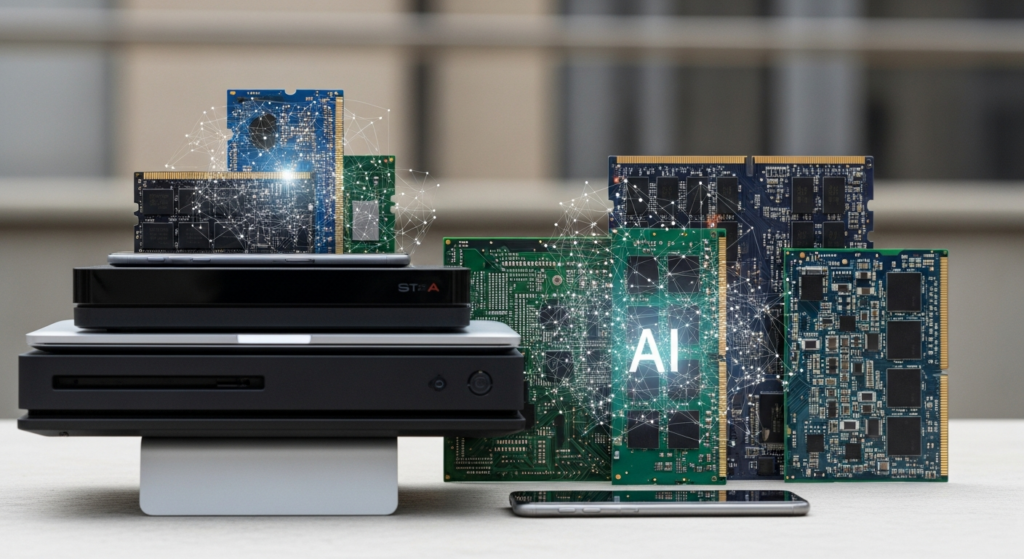
The escalating global demand for artificial intelligence infrastructure is creating significant ripple effects across the consumer electronics market, leading to tighter supplies and upward price pressure on key components. This dynamic is increasingly impacting the cost of devices ranging from personal computers and smartphones to gaming consoles, a trend that will be felt by consumers and institutions in Greenwood.
At the heart of this shift is the specialized memory required for advanced AI applications. Artificial intelligence models, particularly those involved in complex data processing and machine learning, rely heavily on high-bandwidth memory (HBM). These advanced memory chips are distinct from the standard dynamic random-access memory (DRAM) and NAND flash storage typically found in consumer devices.
The intense focus and investment in HBM production for AI servers and data centers are diverting manufacturing capacity and resources from the production of more conventional memory components. This reallocation of resources creates a supply constraint for standard DRAM and NAND, which are fundamental to nearly all modern consumer electronics. As the supply of these components becomes tighter, their wholesale prices increase, a cost that manufacturers of consumer devices often pass on to retailers and, ultimately, to the end consumer.
Technology and business analysts have noted this trend, indicating that the pressure on component supply is a significant factor in the rising retail prices of various electronics. This is not a localized phenomenon but a global market adjustment, driven by the rapid expansion of the AI sector and its substantial hardware requirements. For consumers in Greenwood, this means that future purchases of new laptops, desktop computers, mobile phones, or video game consoles may come with a higher price tag than in previous years.
### Why it matters in Greenwood
The global economic forces driving up the cost of memory and storage components have direct implications for the community of Greenwood. Local institutions, such as Lander University and Piedmont Technical College, regularly invest in technology upgrades for their classrooms, labs, and administrative offices. Increased hardware costs could strain budgets, potentially affecting the resources available for students and faculty. Similarly, major employers like Self Regional Healthcare and Eaton Corporation rely on robust and up-to-date IT infrastructure; higher equipment costs could impact their operational expenditures. For households across Greenwood, the rising prices for essential electronics mean that budgeting for new devices, whether for work, education, or entertainment, will require more consideration. This trend underscores how global technological shifts can translate into tangible economic impacts at the local level.