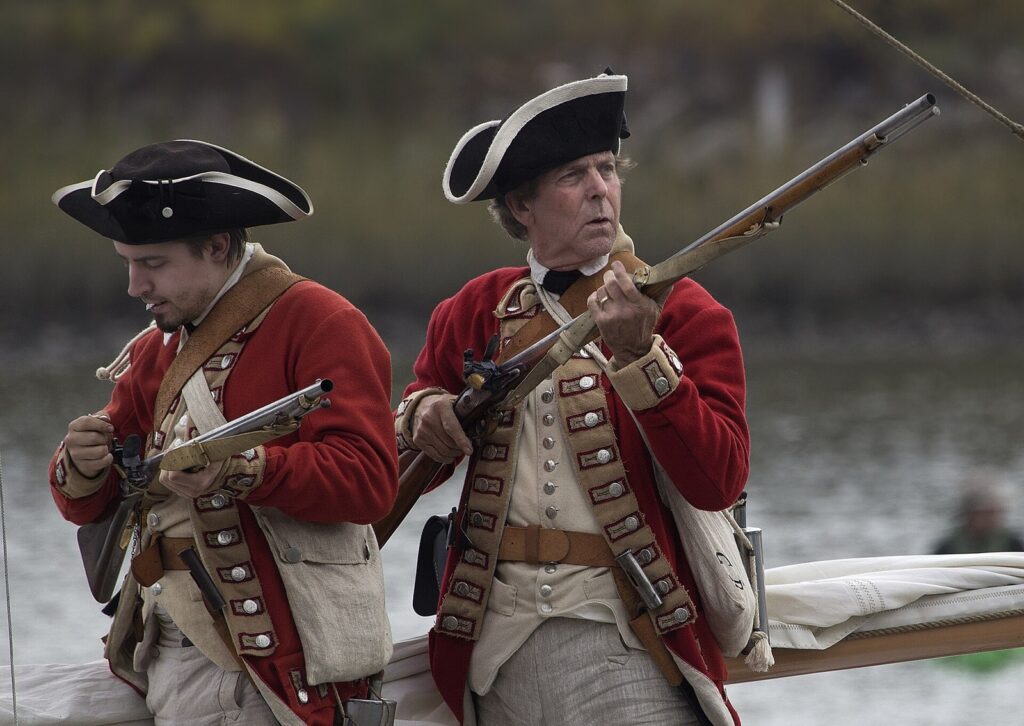
GREENWOOD, S.C. — A new roadside marker along U.S. 221 in Greenwood County now points to the general area where Brig. Gen. Andrew Williamson kept White Hall, a frontier plantation that doubled as a fortified militia post during the Revolutionary War. The sign will be formally unveiled at 11 a.m. Saturday, Oct. 31.
The marker stands near the road’s intersection with Greenwood Mills Farm Road. The state Department of Archives and History approved it, and a grant from the state’s Revolutionary War Sestercentennial Commission, known as SC250, covered the cost. The county’s own SC250 group, the Greenwood250 Coalition, put the proposal forward.
For decades nobody knew exactly where White Hall had stood. The Whitehall name survived on a road, a church, a community, a former school and several farms, but the original homesite was lost. That changed in 2024, when a ground-scanning detector survey coordinated by SC250 placed it within a half-mile of where the sign now stands. The search had support from property owners in the area, from Greenwood250 and from Charles Baxley, the former SC250 chairman who died in 2024.
The plantation sits on private, wooded land, and its precise location will be kept private. Greenwood250 hopes to bring in archaeologists for more work that could reveal more about the property and its owner.
Williamson, the son of Scottish settlers, never had formal schooling but had turned White Hall into a sprawling plantation by 1767. He lived there with his wife, Eliza, their four children and a number of enslaved people. He went on to become the highest-ranking militia officer on the state’s western frontier. From 1776 to 1780 the property served as his headquarters for campaigns against the Cherokee and into Georgia and Florida, and as a garrison and supply depot.
White Hall also hosted the election of delegates to South Carolina’s first provisional congress. Its story took a sharp turn in 1780, when Williamson accepted British protection and fed the British intelligence, a move that turned many Patriots against him. He left the plantation behind. On Dec. 5, 1781, a Loyalist force stormed the fortified plantation and took control, and the property was later destroyed. By early 1782 Williamson was back on the Patriot side, working as a spy.
The site belongs to a wider local story. The old Ninety Six District, centered near what is now Greenwood County, was a major battleground of the war, and the 1781 siege at Ninety Six, about 10 miles southwest of Greenwood, was one of its major engagements.
State officials have considered White Hall important since 1936, the year the state historical marker program began. Back then, the program’s founding director, who came from Troy, put White Hall on the forms she filed for Greenwood County.
Anyone may attend the Oct. 31 unveiling, but getting to the marker site is difficult and not suitable for people with limited mobility. Greenwood250 asks people who plan to come to let the group know ahead of time so it can share safety details and keep the crowd at a manageable size.
Section: More Greenwood SC events news
Greenwood events business profiles
Filed under: Greenwood SC Events News