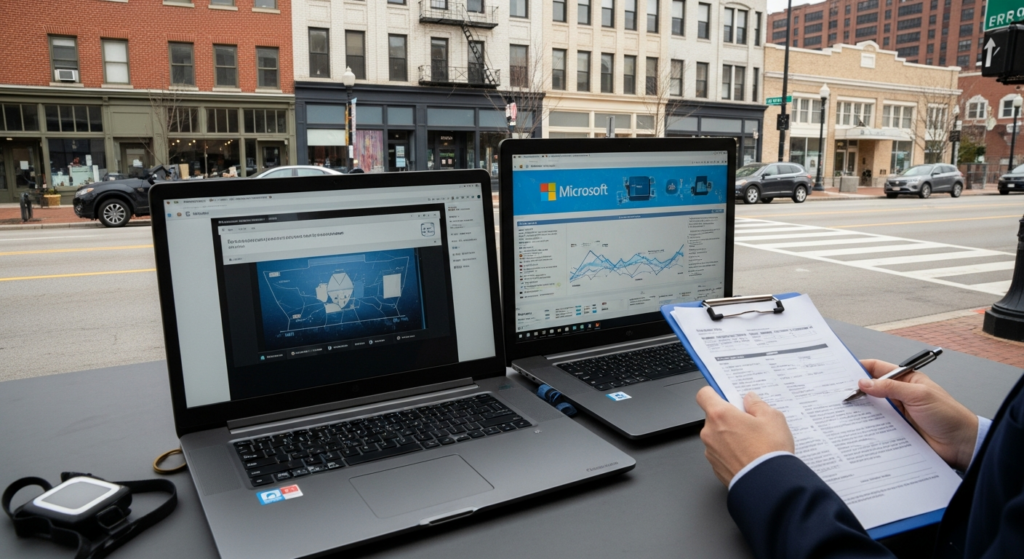
Microsoft has launched a new initiative backed by a $2.5 billion commitment, designed to assist companies in integrating artificial intelligence tools into their operations. The effort, which also includes dedicated staffing support, signals a significant push from the technology giant to accelerate AI adoption across various industries.
The program is described as a comprehensive approach to help businesses navigate the complexities of implementing AI, from initial strategy development to deployment and scaling. This includes providing expertise and resources to ensure that companies can effectively leverage AI to enhance efficiency, foster innovation, and improve decision-making. The investment underscores a broader industry trend toward making advanced AI capabilities more accessible and practical for a wider range of enterprises.
For a city like Greenwood, where key sectors include healthcare, education, and advanced manufacturing, the implications of such a large-scale AI adoption drive are notable. Local institutions, including Self Regional Healthcare, Lander University, and companies like Eaton Corporation and Lonza (Capsugel), continuously seek technological advancements to maintain competitiveness and improve services. The availability of structured support from a major technology provider like Microsoft could offer new avenues for these organizations to explore AI’s potential.
The initiative’s focus on enterprise-level implementation means that businesses of varying sizes, from established corporations to growing local firms in Greenwood, could potentially benefit from enhanced access to AI tools and expertise. As artificial intelligence continues to evolve, its integration into daily business processes is becoming increasingly critical for operational optimization and strategic growth.
### Why it matters in Greenwood
The national push by Microsoft to accelerate AI adoption holds particular relevance for Greenwood’s economic landscape. Institutions such as Self Regional Healthcare, a cornerstone employer and healthcare provider in the city, could explore AI applications for patient care, administrative efficiency, or research. Similarly, Lander University may consider how AI tools can enhance academic programs, research capabilities, or operational management. For manufacturing entities like Eaton Corporation or Lonza (Capsugel), AI integration could lead to advancements in production processes, supply chain management, or product development. While specific local engagements with this Microsoft initiative are not yet known, the broader availability of resources and expertise for AI adoption could influence strategic planning and technological investments across Greenwood’s key industries, shaping future workforce needs and economic development.